In women’s wellness, few topics are as pivotal as gut health. Understanding that your gut is essentially the entire digestive and detox system, and a control center that influences hormones, mood, energy, and resilience to stress, empowers you to take control of your health. When the microbiome thrives, it becomes one of the most potent natural ways to balance hormones and restore vitality, giving you the power to influence your own well-being.
In this gut health for women guide, we’ll explore the science behind the gut-hormone connection, how cortisol and gut health influence stress resilience, and practical steps—such as incorporating probiotics for hormone balance and adopting holistic gut health habits—that every woman can start today.
Unlocking the Power of Gut Health for Women

The gut is an ecosystem and is home to trillions of microbes, collectively known as the microbiome. This living ecosystem supports health in many ways. Here are a few:
- Nutrient absorption – key vitamins (B12, folate) and minerals (iron, zinc, selenium).
- Immune system – over 70% of the immune system lives in the gut.
- Neurotransmitters – serotonin, dopamine, and GABA production for mood stability.
- Hormone metabolism – recycling or clearing estrogen, progesterone, cortisol, and thyroid hormones.
For women, this balance is essential because even slight gut disruptions can show up as PMS, irregular cycles, fertility struggles, thyroid imbalances, mood swings, or stubborn stress.
Signs Your Gut May Be Disrupting Hormone Balance
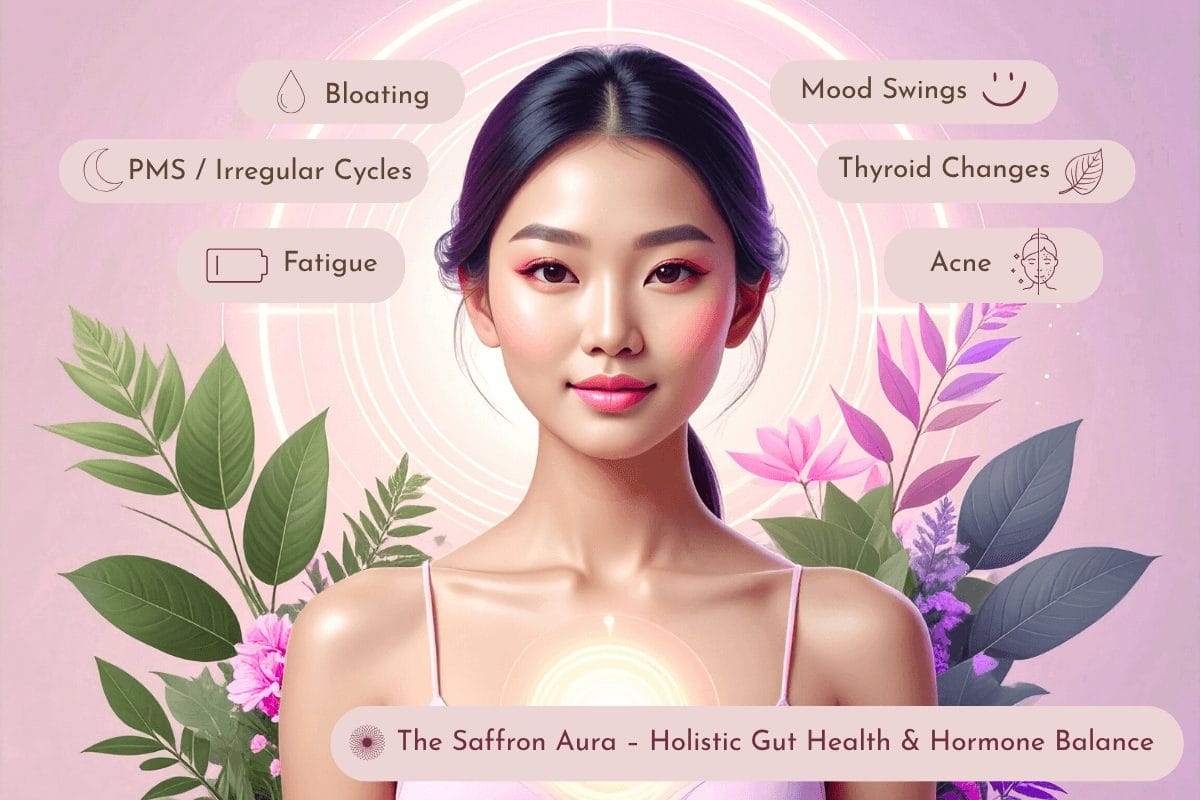
Your gut doesn’t whisper when it’s out of balance—it speaks loudly through both digestive and hormonal symptoms. Women often notice:
- Digestive changes: bloating, gas, constipation, diarrhea, or heartburn.
- Hormonal imbalances: irregular cycles, PMS, heavy or painful periods, low libido.
- Mood + mental health shifts: anxiety, irritability, depression, or brain fog.
- Skin + metabolic issues: acne, stubborn weight gain, hair thinning, or fatigue.
- Thyroid symptoms include cold hands and feet, a sluggish metabolism, and low energy levels.
From a functional medicine perspective, these symptoms often reflect poor hormone clearance, nutrient malabsorption, or stress-driven dysbiosis.
From an Ayurvedic perspective, it mostly comes down to first assessing your digestive power, toxic buildup, and elemental imbalances, which show up in different ways:
- Excess fire (Pitta): acid reflux, anger, hot flashes, heavy bleeding.
- Weak fire (Kapha): sluggish digestion, weight gain, bloating, fluid retention.
- Irregular fire (Vata): constipation, gas, anxiety, irregular cycles.
Recognizing these signs early is the first step toward restoring both gut harmony and hormonal balance, as well as preventing future diseases.
Gut Health and Estrogen
Estrogen is metabolized and recycled in the gut. Certain microbes produce beta-glucuronidase, an enzyme that reactivates estrogen bound for elimination. When balanced, this supports steady hormone levels. When dysbiosis occurs, estrogen can build up—leading to heavy periods, breast tenderness, bloating, or conditions like endometriosis. A clinical trial found that women taking a probiotic blend with β-glucuronidase activity maintained healthier estrogen levels compared to those on a placebo, suggesting probiotics for hormone balance may be a powerful natural tool.
Tip: Boost estrogen clearance naturally with fiber-rich foods (such as flax, chia, and leafy greens) and probiotics for optimal hormone balance.
Progesterone and the Microbiome
Progesterone is often referred to as the “calm and steady” hormone as it activates GABA (a neurotransmitter that reduces stress and anxiety). It supports ovulation, fertility, restful sleep, and emotional ease. Low progesterone is usually linked with anxiety, short luteal phases, and irregular cycles. Emerging research indicates that a healthy microbiome supports healthy progesterone levels by reducing inflammation and enhancing adrenal resilience.
The Gut’s Role in Thyroid Function
The gut-thyroid connection is another key axis for women. Thyroid hormones regulate metabolism, energy, and menstrual cycles. A sluggish gut with poor digestion and detox creates an inflammatory environment, and the thyroid is sensitive to toxins, both internal and external – a toxin is a toxin. An inflammatory environment also increases the need for nutrients and may impair the absorption of iodine, selenium, and zinc—critical nutrients for thyroid hormone conversion. Leaky gut or autoimmunity can also trigger thyroid dysfunction.
Functional tip: Include Brazil nuts (rich in selenium), seaweed (a good source of iodine), and pumpkin seeds (high in zinc) to nourish thyroid health while supporting gut balance.
The Gut-Stress Axis: Cortisol and Gut Health

The relationship between cortisol and gut health is the most important. Cortisol is the primary stress hormone, designed to help us respond quickly to challenges. But chronic stress keeps cortisol elevated, leading to fatigue, anxiety, belly fat storage, and cycle irregularities.
A healthy microbiome acts as a buffer and is the key to the gut-brain connection, all facilitated by the vagus nerve.
- It regulates inflammation that worsens stress reactivity.
- It helps reset the HPA axis, the body’s stress control system.
This explains why women who prioritize gut health often feel calmer, sleep better, and handle daily stress with more ease.
Mind-body practices, including meditation, breathwork, and mindful eating, reduce stress signals while directly supporting gut flora diversity.
Mindful practices, such as journaling, can help reset the gut-stress axis. Explore our Mindfulness Journal for guided prompts that calm the mind and nourish gut balance.
Probiotics and Hormones: Aligning Your Gut for Better Stress Management

For most women, taking probiotics to support hormone balance is generally safe and well-tolerated, especially when introduced gradually. Suppose you are sensitive to changes in supplements or herbs. In that case, even probiotics may cause mild and temporary effects such as gas, bloating, or changes in stool, as the microbiome adjusts to the new bacteria. These effects usually resolve as the gut stabilizes.
However, there are many types of probiotics available today, and they are surely not all created equal; hence, choosing supplements that undergo third-party testing ensures safety and potency is essential. Women with special conditions—such as SIBO (small intestinal bacterial overgrowth), weakened immunity, or those taking specific medications—should consult a practitioner before starting supplements.
A simple tip: start with probiotic foods first—like yogurt, kefir, sauerkraut, or kimchi—before moving on to supplements. Fermented foods are food-based probiotics, and they can sometimes be more gentle and provide. A more effective way to introduce beneficial species, such as food, enables the body to adapt naturally while still delivering powerful benefits for hormone balance and overall well-being.
Certain strains, including Lactobacillus reuteri, Lactobacillus rhamnosus, and Bifidobacterium lactis, have been shown to influence estrogen and cortisol metabolism. These probiotics for hormone balance can help alleviate PMS symptoms, improve menstrual cycle regularity, and reduce stress. Start with fermented foods (sauerkraut, miso, kefir) or a quality women’s probiotic, but start low.
How Long Does It Take to See Results?
Balancing hormones through gut health doesn’t happen overnight—it’s a gradual process that mirrors the body’s natural cycles. Most women begin to notice digestive improvements, such as reduced bloating, improved bowel regularity, and a boost in daily energy, within 2–4 weeks of making consistent changes; however, to be honest, this is a variable, and it also depends on how your body responds.
With continued support, more profound hormonal shifts will unfold; however, additional support through supplements, lifestyle changes/herbs may be necessary. By 1–3 months, many women experience more stable menstrual cycles, lighter PMS symptoms, and improved mood. Over the course of 3–6 months, gut restoration can have a ripple effect on fertility support, thyroid balance, and long-term resilience to stress.
Although consistency is the key, alignment of the gut can depend on how severe the imbalance is to begin with. Just as hormones follow cyclical rhythms, so does the microbiome—it thrives on daily nourishment from probiotics, fiber, and holistic lifestyle practices. I say, the more diverse your lifestyle and diet, the more varied your microbiome. Women who commit to these habits steadily often see lasting, meaningful improvements in both digestion and hormone balance.
Gut Health for Women: Real-Life Strategies
For PMS & Periods: Probiotics, magnesium, and leafy greens support estrogen clearance.
For Fertility: Reduce gut inflammation with omega-3s, bone broth, and stress care.
For Mood Swings: Support cortisol regulation with probiotic foods, adaptogens like ashwagandha, and breath practices.
For Thyroid: Ensure mineral sufficiency and reduce gluten if sensitive.
Each step moves you toward hormonal harmony by strengthening the microbiome.
Embrace a Holistic Approach

Gut health for women is not just about avoiding digestive discomfort—it’s the foundation for hormonal balance, stress relief, fertility, and long-term vitality. Natural ways to balance hormones involve combining probiotics for hormone balance, practicing holistic gut health, understanding the connection between cortisol and gut health, adopting a mindful lifestyle, increasing self-awareness, and cultivating patience. By doing so, you can develop sustainable wellness from the inside out.
Holistic Gut Health Habits
Holistic gut health means considering the entire body—not just one system, specifically the digestive tract.
Here are some natural ways to balance hormones with these lifestyle changes:
- Eat on time: Regular meals help stabilize blood sugar and cortisol levels.
- Deep Sleep: Growth and repair hormones reset at night.
- Daily Movement: Engaging in activities like walking, yoga, or strength training helps maintain a diverse microbiome.
- Mindful Activities: Practicing mindful management through meditation, journaling, or breathing can directly improve gut-brain harmony.
Ayurvedic perspective: Align meals and sleep with natural rhythms (early dinners, consistent bedtimes) to honor both gut fire (Agni) and hormone cycles.
Bringing It All Together
Caring for your gut is one of the most powerful ways to restore hormonal harmony, ease stress, and feel more balanced every day. With simple changes—such as nourishing probiotic foods, practicing mindfulness, and maintaining consistency in your routines—you can support both digestion and emotional well-being. Your body thrives on balance, and your gut is at the center of that transformation.